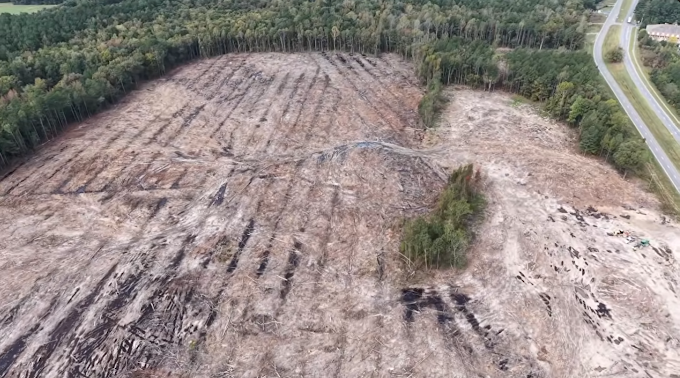

Can You Get Paid to Clear Your Land? What Most Contractors Won’t Tell You
If you’re planning to clear land in Virginia — for a new home, a farm expansion, a commercial project, or just to reclaim overgrown acreage — you’re probably bracing for a big bill. Land clearing costs in Central Virginia typically run $1,500 to $12,000+ per acre depending on the vegetation, and that’s before excavation or grading.
But here’s something most land clearing contractors won’t tell you: if your property has marketable timber, you may be able to sell those trees before clearing — and use the revenue to offset (or even eliminate) your clearing costs.
At R.L. Elliott Enterprises, we’ve been providing land clearing services across Central Virginia for over 35 years. Because we are loggers also, we help landowners get paid for their timber before clearing — something most clearing-only contractors can’t offer.
Here’s how it works, when it applies, and when it doesn’t.
How Selling Timber Before Clearing Works
The concept is straightforward: instead of paying a contractor to cut down, haul off, and dispose of every tree on your property, you harvest the valuable timber first and sell it to sawmills. The revenue from the timber sale goes to you — the landowner — and reduces the total cost of your land clearing project.
Here’s the typical process:
- Free timber assessment — A logging contractor walks your property and evaluates the species, size, quality, and volume of your trees
- Timber valuation — Based on current market prices, you get an estimate of what your trees are worth
- Selective harvesting — Marketable trees are felled, skidded, and transported to local sawmills
- Land clearing — After the timber is removed, the remaining brush, stumps, and non-merchantable wood is cleared
- Final grading or mulching — The site is prepared for its intended use
When a single contractor handles both the logging and the clearing, the entire process is faster, more efficient, and significantly cheaper than hiring two separate companies.
What Are Your Trees Actually Worth?
The value of your timber depends on species, diameter, quality, and current market conditions. In Central Virginia, here’s what landowners can expect in 2026:
| Species | Stumpage Price (per MBF) | Notes |
|---|---|---|
| White Oak | $400 – $800+ | Highest demand — driven by bourbon barrel market |
| Red Oak | $250 – $500 | Strong market for flooring, furniture, cabinets |
| Yellow Poplar (Tulip) | $200 – $400 | Fast-growing, widely used in construction lumber |
| Virginia Pine | $200 – $350 | Pulpwood and chip-n-saw markets |
| Walnut | $500 – $1,500+ | Premium species — veneer-quality logs command top dollar |
| Hickory | $200 – $400 | Flooring and tool handle markets |
MBF = thousand board feet. Stumpage price = what the landowner receives. Prices vary by log quality, diameter, and proximity to mills. For a detailed breakdown, see our guide to Virginia timber prices in 2026.

Real-World Example: 10-Acre Clearing in Hanover County
A landowner in Hanover County needed 10 acres cleared for a horse farm. The property was heavily wooded with a mix of mature White Oak, Red Oak, and Virginia Pine.
- Timber revenue: ~$18,000 from sawtimber and pulpwood sales
- Land clearing cost (after logging): ~$25,000 for remaining brush clearing, stump removal, and grading
- Net clearing cost: ~$7,000 — a savings of over $18,000 compared to clearing without logging first
Without the timber sale, the same project would have cost $40,000+ because the contractor would have had to cut, haul, and dispose of all the wood at the landowner’s expense.
Land Clearing Methods: Which One Saves You Money?
Not every clearing method allows you to recoup timber value. Understanding the differences matters:

Logging + Land Clearing (Best for Maximizing Value)
This is the approach that pays you. Marketable timber is harvested and sold first, then the remaining vegetation is cleared. This method requires a contractor who does both logging and clearing — which is exactly what R.L. Elliott provides.
Best for: Properties with mature, marketable hardwoods or pine — typically 10+ inches in diameter
Forestry Mulching (Best for Overgrown Land)
Forestry mulching uses a single machine to grind brush, saplings, and small trees into mulch on-site. It’s fast, affordable ($1,200–$3,500/acre), and leaves no exposed soil. However, forestry mulching destroys the timber value — everything gets ground up.
Best for: Properties with small-diameter trees (under 8–10 inches), brush, overgrown fields, and fence lines where there’s no significant timber value
Traditional Clear-and-Grub (Most Expensive)
Heavy equipment (excavators with thumb attachments, dozers) removes all vegetation including stumps and root systems. This is the most thorough — and most expensive — method at $5,000–$12,000+/acre.
Best for: Construction sites requiring clean, grubbed subgrade. Often follows logging to reduce costs.

The Smart Approach: Combine Methods
The most cost-effective strategy for heavily wooded properties is to combine logging with clearing:
- Log first — Harvest and sell all marketable timber
- Mulch or clear second — Use forestry mulching or traditional clearing to handle the remaining brush and non-merchantable trees
- Excavate last — Grade and shape the land for its final use
This layered approach maximizes your timber revenue while minimizing clearing costs. It’s what we recommend — and execute — on the majority of our large-acreage projects.
When Logging Doesn’t Apply (Being Honest)
Selling timber before clearing isn’t always an option. Here’s when it doesn’t work:
- Small trees — If most trees are under 10 inches in diameter, they’re generally not merchantable as sawtimber. Pulpwood markets exist, but prices are much lower.
- Poor species mix — Some species (like sweetgum or certain softwoods) have limited market value in Virginia
- Damaged or defective timber — Hollow, rotten, or storm-damaged trees may not be worth harvesting
- Small lots — For quarter-acre or half-acre residential lots, the volume of timber usually isn’t enough to justify a logging operation. The mobilization cost outweighs the revenue.
- Access issues — Logging requires equipment access. If the timber is in a location that can’t be reached by skidders and log trucks, harvesting may not be feasible.
- Purely brush or overgrown fields — If there are no trees, just brush and saplings, forestry mulching is the right solution — not logging.
A reputable contractor will tell you upfront whether your property has marketable timber. If it doesn’t, they shouldn’t try to sell you a logging operation you don’t need. That’s our approach — we give you an honest assessment, free of charge.
Why Most Contractors Don’t Offer This
Here’s the part most contractors won’t tell you: the majority of land clearing companies don’t do logging. They own excavators and mulching heads, but they don’t have logging equipment, log trucks, or relationships with sawmills.
When you hire a clearing-only contractor, they have two options for your trees:
- Push them into a pile and burn them — Your timber value literally goes up in smoke
- Cut them up and haul them to a landfill — You pay disposal fees on top of clearing costs
Either way, you lose the timber revenue and pay more for the clearing. The contractor has no incentive to tell you about it because they can’t capture that value for you.
R.L. Elliott Enterprises is different because we’re a full-service land clearing and logging contractor. We own logging equipment, maintain relationships with sawmills across Virginia, and handle the entire process — timber sale through final clearing — under one contract.

How to Get Started: Free Timber Assessment
If you own wooded land in the Richmond, Hanover, Mechanicsville, or Ashland area and need it cleared, here’s what to do:
- Call us at (804) 550-1761 or request a quote online
- We’ll walk your property — free of charge — and assess the timber, vegetation, and terrain
- You’ll get an honest estimate that includes timber value (if any), clearing costs, and the net cost to you
- If there’s merchantable timber, we’ll harvest and sell it first, then clear the land
- If there’s no timber value, we’ll recommend the most cost-effective clearing method for your situation
There’s no obligation and no pressure. We’ve been doing this for 35+ years — we’ll give you a straight answer.
Frequently Asked Questions
Can I really get paid to have my land cleared?
Yes — if your property has marketable timber (typically mature hardwoods or pine 10+ inches in diameter), the timber can be sold to sawmills before clearing begins. The revenue goes to you and offsets your clearing costs. On heavily wooded properties, timber sales can reduce net clearing costs by 30–60% or more.
How much can I make from selling timber before clearing?
It depends on the species, volume, and quality of your trees. In Central Virginia, a 10-acre tract with mature hardwoods might yield $10,000–$30,000+ in timber revenue. White Oak is especially valuable at $400–$800+ per MBF. We provide free timber assessments so you know exactly what your trees are worth before committing.
What’s the difference between forestry mulching and logging?
Forestry mulching grinds all vegetation into mulch on-site — it’s fast and affordable but destroys the timber value. Logging selectively harvests merchantable trees and sells them to sawmills, generating revenue for the landowner. For properties with large, valuable trees, logging first and then mulching the remainder is the most cost-effective approach.
Do I need a permit to clear land in Virginia?
In most Virginia localities, yes. Land disturbance permits are typically required for projects disturbing 2,500+ square feet. Requirements vary by county — Henrico, Hanover, and Chesterfield each have their own rules. R.L. Elliott helps clients navigate the permitting process. For a full breakdown, see our Virginia land clearing permit guide.
How do I know if my trees are worth anything?
The best way is a free timber assessment from a licensed logging contractor. Generally, trees are merchantable as sawtimber if they’re 10+ inches in diameter, straight, and a desirable species (Oak, Walnut, Poplar, Pine). We’ll walk your property and give you an honest valuation at no cost. Call (804) 550-1761.
Can I sell timber from a small residential lot?
It’s possible but often not practical. Logging operations have mobilization costs (transporting equipment to the site), so small lots with only a few trees may not generate enough revenue to justify a harvest. However, if you have several large, high-value trees (especially White Oak or Walnut), it may still be worth it. We’ll tell you honestly whether a timber sale makes sense for your property.
How long does the logging and clearing process take?
For a typical 5–10 acre project in the Richmond metro area, the combined logging and clearing process takes 2–4 weeks. Logging usually takes a few days to a week, followed by clearing and any necessary grading. Larger tracts or projects requiring permits may take longer. We schedule most projects within 1–2 weeks of agreement.
Find Out What Your Trees Are Worth
Free timber assessment and land clearing estimate from Central Virginia’s most experienced logging and land clearing contractor. 35+ years, Class A licensed, SWAM certified.
Call (804) 550-1761
Request a Free Estimate
R.L. Elliott Enterprises Inc. • 10291 Kings Acres Road, Ashland, VA 23005 • Serving Central Virginia Since 1989